

What happens when we invalidate feelings?
Invalidation occurs when we tell a child they shouldn’t feel the way they do (e.g., “It’s not a big deal,” “Stop being dramatic,” or “You’re fine”).
Self-Doubt
It teaches children that they cannot trust their own internal compass. If they feel sad but are told they are “fine,” they learn to stop trusting their own intuition.
The “Performance” Trap
It sends a message that they are only acceptable when they are “coping” or “happy.” This creates a fear that showing weakness will lead to being rejected or seen as a burden to the family “herd.”
Inferiority
It signals that they are somehow less capable than others because they are struggling with an experience.
What happens when we ignore feelings?
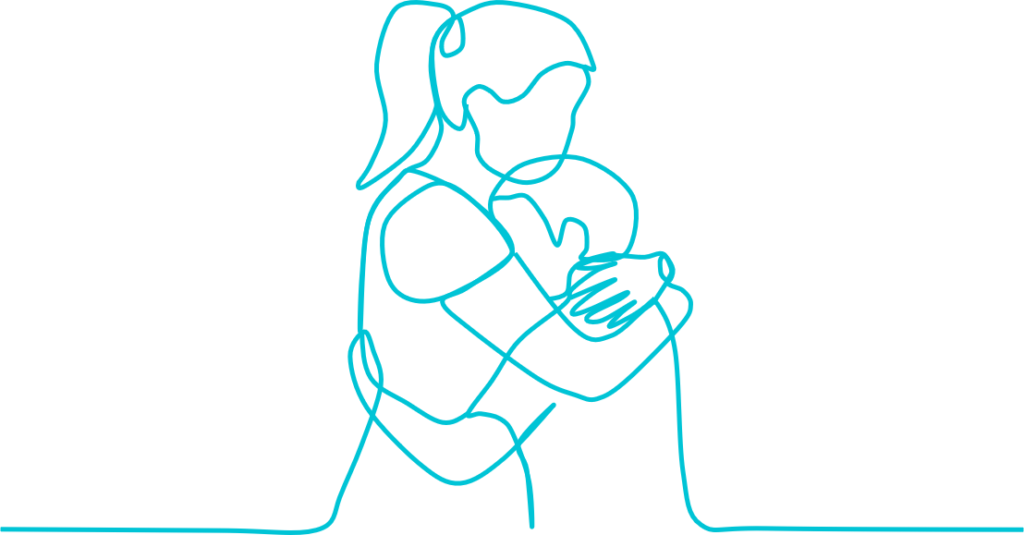
Staying silent or dismissing an emotional bid for connection can be just as impactful as active invalidation.
Disconnected Roots
Connection is a fundamental human need. Ignoring emotions signals to a child that their internal world is inconvenient or unimportant.
Devaluation
It subtly communicates that their value is tied to their convenience. If their feelings don’t matter, they start to believe they don’t matter.
The strength of validation
Validating a feeling is not the same as agreeing with a behaviour. You can validate that a child is angry while still maintaining a boundary that they cannot hit. Validation teaches:
Self-Trust & Safety
It confirms that their “internal warning signs” are accurate. This is a vital life skill for navigating future relationships and safety.
The “Shared Load”
Humans evolved in groups so we wouldn’t have to be perfect or strong all the time. Validation proves the family is a team that collaborates to solve problems rather than a group where everyone must struggle alone.
Resilience, Not Softness
When a child feels heard, their nervous system settles. This “siting with” the feeling allows them to move into critical thinking. From a place of safety, they can learn to:
- Solve the problem causing the distress.
- Accept situations that cannot be changed with grace.
- Develop new skills to handle similar challenges next time.
The Bottom Line
Validation tells your child: “You belong here, exactly as you are. Your feelings are a valid part of our human experience, and we will work through them together.
Written by:

Kate Marshall
Counsellor & Psychotherapist – Serenity Counselling
Phone 0482 012 258 or visit
www.serenitycounselling.com.au/bookings to schedule a session.
Resources
Baumeister, R. F., & Leary, M. R. (1995). The need to belong: Desire for interpersonal attachments as a fundamental human motivation. Psychological Bulletin, 117(3), 497–529. https://doi.org/10.1037/0033-2909.117.3.497
Eisenberg, N., Cumberland, A., & Spinrad, T. L. (1998). Parental Socialization of Emotion. Psychological Inquiry, 9(4), 241–273. https://doi.org/10.1207/s15327965pli0904_1
Fruzzetti, A. E., Shenk, C., & Hoffman, P. D. (2005). Family interaction and the development of borderline personality disorder: A transactional model. Development and Psychopathology, 17(4), 1007–1030. https://doi.org/10.1017/s0954579405050479
Gottman, J. M., Katz, L. F., & Hooven, C. (1996). Parental meta-emotion philosophy and the emotional life of families: Theoretical models and preliminary data. Journal of Family Psychology, 10(3), 243–268. https://doi.org/10.1037/0893-3200.10.3.243
Keng, S.-L., & Soh, C. Y. (2018). Association between childhood invalidation and borderline personality symptoms: self-construal and conformity as moderating factors. Borderline Personality Disorder and Emotion Dysregulation, 5, Article 19. https://doi.org/10.1186/s40479-018-0096-6
RELEASE DATE: 05/03/2026
REVISED: 02/08/2026